Workmanship disputes
Most swimming pool construction disputes begin with a disagreement over a few minor workmanship issues.
Why you need an expert opinion
Since most disputes are initiated over minor issues of workmanship, imagine what larger issues were overlooked?
How can you be sure that there are not more serious issues?
Were the aqua designs internationally correct?
Did the plans even comply with acceptable industry standards for care and workmanship?
Was the structural engineering even sufficient for your site and soil conditions?
If you are not an expert on the subject of international aqua design, construction, building codes or workmanship standards, then how can you possibly be aware of all of the relevant issues?
An expert witness will perform a visual evaluation of the project, and review the photographic documentation, project plans and specifications. From a review of these items, opinions can be made about most items.
If questions remain to be answered that cannot be resolved by visual inspections, sample and material testing may be warranted.
You didn't know how to build your own pool to begin with - how can you sure that everything was built correctly from the ground up?
An expert witness can help you determine if there are larger issues than the minor issues you are disputing.
Contact the author, Paolo Benedetti of Aquatic Technology Pool and Spa at:
info@aquatictechnology.com or 408-776-8220.
Visit his website at: www.aquatictechnology.com.
All Contents © Aquatic Technology Pool & Spa, 2013.
All rights reserved.
Sunday, February 1, 2015

Wednesday, January 14, 2015
Swimming Pool Reinforcing Steel Non-Contact Lap Splices
Pool Expert Witness discusses the importance of non-contact lap splices in reinforcing steel (rebar) for shotcrete (gunite) pool structures.
Since most concrete swimming pools are constructed out of shotcrete (sprayed concrete, sometimes also incorrectly called "gunite"), the placement of the reinforcing steel is critical.
Placing bars adjacent to each other (contact lap splice) is permissible for poured or cast concrete structures. It is easy and efficient.
Contact Lap Splices
In sprayed concrete applications, contact lap splices can cause shadowing, honeycombs and voids within the structure.
If the contact lap splices are stacked & orientated towards the direction of the sprayed concrete, shadowing will be minimized.
However, this will also cause the reinforcing steel to be thicker, resulting in the use of additional concrete (equal to the thickness of the stacked bars). On a large project that additional concrete cost could be substantial.
Non-Contact Lap Splices
A simpler and more economical method is the non-contact lap splice method. Bars from opposing directions are staggered and separated by two to three inches. This allows the concrete to encase and encapsulate each bar and virtually guarantees no voids behind groupings of bars.
 Both Contact Lap Splices and Non-Contact Lap Splices can be seen in the above image. It is not particularly important on this project, as the floor will be cast in place concrete.
Contact the author, Paolo Benedetti of Aquatic Technology Pool and Spa at: info@aquatictechnology.com or 408-776-8220.
Visit his website at: www.aquatictechnology.com.
All Contents © Aquatic Technology Pool & Spa, 2013.
All rights reserved.
Aquatic Consultant, International Pool Designer, Pool Construction, Watershape Engineering
Since most concrete swimming pools are constructed out of shotcrete (sprayed concrete, sometimes also incorrectly called "gunite"), the placement of the reinforcing steel is critical.
Placing bars adjacent to each other (contact lap splice) is permissible for poured or cast concrete structures. It is easy and efficient.
Contact Lap Splices
In sprayed concrete applications, contact lap splices can cause shadowing, honeycombs and voids within the structure.
If the contact lap splices are stacked & orientated towards the direction of the sprayed concrete, shadowing will be minimized.
However, this will also cause the reinforcing steel to be thicker, resulting in the use of additional concrete (equal to the thickness of the stacked bars). On a large project that additional concrete cost could be substantial.
Non-Contact Lap Splices
A simpler and more economical method is the non-contact lap splice method. Bars from opposing directions are staggered and separated by two to three inches. This allows the concrete to encase and encapsulate each bar and virtually guarantees no voids behind groupings of bars.
Contact the author, Paolo Benedetti of Aquatic Technology Pool and Spa at: info@aquatictechnology.com or 408-776-8220.
Visit his website at: www.aquatictechnology.com.
All Contents © Aquatic Technology Pool & Spa, 2013.
All rights reserved.
Aquatic Consultant, International Pool Designer, Pool Construction, Watershape Engineering
Tuesday, December 9, 2014
Lowest Bid Swimming Pool is not always the lowest cost
General Contractors who are bidding the development of a property often times solicit bids from aquascape consultants and swimming pool contractors. Yet, in the end the lowest bidder often times ends up being more expensive that the most expensive bid. How is that so?
Experience and knowledge
The highest bidder is usually the one with the most knowledge and experience. They have the foresight to anticipate additional costs. Those costs and "extras" are built into their bid, saving them the hassle of justifying future change orders.
Change Orders
You should be asking yourself, "Why is the high bidder so much more expensive than the lowest bidder?"
The low bidder is going to present you with multiple change orders during the project. Those increases in cost are going to push your overall costs close to that of the more experienced builder.
So why not just hire the best to begin with?
Contact the author, Paolo Benedetti of Aquatic Technology Pool and Spa at: info@aquatictechnology.com
or
408-776-8220.
Visit his website at:
www.aquatictechnology.com.
© Aquatic Technology Pool & Spa, 2013.
All rights reserved.
Major Markets Serviced:
San Francisco, Palo Alto, Atherton, Hollywood Hills, Beverly Hills, Malibu, Los Angeles, San Diego, San Clemente, Pacific Palisades, Escondido, Scottsdale, Seattle, Phoenix, Tempe, Portland, Aspen, Vail, Park City, Chicago, Dallas, Houston, Austin, New Orleans, Madison, Detroit, East Hamptons, South Hamptons, Cape May, Ft. Lauderdale, Orlando, Raleigh, Chapel Hill, Cherry Hill, Toms River, Salt lake City, Boise, Denver, Santa Barbaara, Carmel, Carmel Valley, Monterey, Pebble Beach, Oceanside, Big Sur, Napa, Sonoma, Sausalito, Danville, Belvedere, Montecito, Palm Springs, Midland, Manhattan, Greenwich Village, Osaka, Paris, Madrid, Barcelona, London, Seoul, Sydney, New York, Tokyo, Cairo, Istanbul, Athens, Rome, Lisbon, Bonn.
Experience and knowledge
The highest bidder is usually the one with the most knowledge and experience. They have the foresight to anticipate additional costs. Those costs and "extras" are built into their bid, saving them the hassle of justifying future change orders.
Change Orders
You should be asking yourself, "Why is the high bidder so much more expensive than the lowest bidder?"
The low bidder is going to present you with multiple change orders during the project. Those increases in cost are going to push your overall costs close to that of the more experienced builder.
So why not just hire the best to begin with?
Contact the author, Paolo Benedetti of Aquatic Technology Pool and Spa at: info@aquatictechnology.com
or
408-776-8220.
Visit his website at:
www.aquatictechnology.com.
© Aquatic Technology Pool & Spa, 2013.
All rights reserved.
Major Markets Serviced:
San Francisco, Palo Alto, Atherton, Hollywood Hills, Beverly Hills, Malibu, Los Angeles, San Diego, San Clemente, Pacific Palisades, Escondido, Scottsdale, Seattle, Phoenix, Tempe, Portland, Aspen, Vail, Park City, Chicago, Dallas, Houston, Austin, New Orleans, Madison, Detroit, East Hamptons, South Hamptons, Cape May, Ft. Lauderdale, Orlando, Raleigh, Chapel Hill, Cherry Hill, Toms River, Salt lake City, Boise, Denver, Santa Barbaara, Carmel, Carmel Valley, Monterey, Pebble Beach, Oceanside, Big Sur, Napa, Sonoma, Sausalito, Danville, Belvedere, Montecito, Palm Springs, Midland, Manhattan, Greenwich Village, Osaka, Paris, Madrid, Barcelona, London, Seoul, Sydney, New York, Tokyo, Cairo, Istanbul, Athens, Rome, Lisbon, Bonn.
Wednesday, November 19, 2014
Proper Compaction of pool deck sub-base
Base materials are not "self-compacting" merely by dumping them on the ground. To ensure longevity of the concrete pool decks proper compaction procedures must be followed.
Soils Report
A thorough soils report will make minimum recommendations for the preparation of the pool deck sub-base. This may include over excavation, removal and recompaction, or the importation of materials.
The most common method is the over excavation of the pool decks when the pool is being dug. After back filling the plumbing and utility trenches, a base material is imported to build the site back up to the proper elevation.
The soils engineer will specify the materials to be used. It may be sand, road base or crushed rock. The thickness of this material is specified by the soils engineer.
Proper Compaction
The thickness of this material will determine the compaction equipment that is to be used. The confinement of the site will also dictate is larger, more efficient equipment can be used.
Jumping jack tampers are reserved for compacting trenches and open pits. Vibratory plates are used for thin layer of materials or final compacting. Walk behind or ride on compactors are sued when the material is to be compacted in 4-6" lifts.
Rolling compactors are the most efficient, as the size of the roller quickly compacts a lot of terra firma.

Using the improper equipment is not only a waste of time and money, it will not result in a stable base. Spreading a foot or more of material, and expecting to compact it with a vibratory plate is a fool hardy endeavor.
While the top may become compacted, the bottom will remain loose. Over time that material will settle, resulting in deck movement and cracking.
Contact the author, Paolo Benedetti of Aquatic Technology Pool and Spa at: info@aquatictechnology.com or 408-776-8220. Visit his website at: www.aquatictechnology.com. All Contents © Aquatic Technology Pool & Spa, 2013. All rights reserved.
Soils Report
A thorough soils report will make minimum recommendations for the preparation of the pool deck sub-base. This may include over excavation, removal and recompaction, or the importation of materials.
The most common method is the over excavation of the pool decks when the pool is being dug. After back filling the plumbing and utility trenches, a base material is imported to build the site back up to the proper elevation.
The soils engineer will specify the materials to be used. It may be sand, road base or crushed rock. The thickness of this material is specified by the soils engineer.
Proper Compaction
The thickness of this material will determine the compaction equipment that is to be used. The confinement of the site will also dictate is larger, more efficient equipment can be used.
Jumping jack tampers are reserved for compacting trenches and open pits. Vibratory plates are used for thin layer of materials or final compacting. Walk behind or ride on compactors are sued when the material is to be compacted in 4-6" lifts.
Rolling compactors are the most efficient, as the size of the roller quickly compacts a lot of terra firma.
Using the improper equipment is not only a waste of time and money, it will not result in a stable base. Spreading a foot or more of material, and expecting to compact it with a vibratory plate is a fool hardy endeavor.
While the top may become compacted, the bottom will remain loose. Over time that material will settle, resulting in deck movement and cracking.
Contact the author, Paolo Benedetti of Aquatic Technology Pool and Spa at: info@aquatictechnology.com or 408-776-8220. Visit his website at: www.aquatictechnology.com. All Contents © Aquatic Technology Pool & Spa, 2013. All rights reserved.
Monday, October 27, 2014
Waterproofing and drainage - retaining walls and basements
Providing drainage alone behind retaining walls and against basement walls is not sufficient to prevent water migration through the wall.
Different Purposes
Drainage and waterproofing behind walls serve two distinct purposes. Drainage is installed to transport ground water away from the structure. Removing the water reduces the hydrostatic surcharge (weight of wet soil on the structure) and helps the waterproofing resist water intrusion.
Given infinite time, water will eventually seep through any waterproofing system. Reducing the water in the soil adjacent to the wall, increases the waterproofing system's chances for success.
A waterproofing membrane is installed on the concrete, to protect it from water that migrates through the drainage system. The waterproofing system also prevents water from seeping into and through the wall.
Water passing through a wall can cause a myriad of issues: corroded reinforcing steel, mold and mildew in the basement, dampness and cold, dry rot, corroded nails and fasteners, electrical shorts, efflorescence, decay and discoloration of surface finishes. As reinforcing steel corrodes it expands. The steel's expansion can cause the concrete to crack - allowing even more water to enter.
Drainage Systems
Drainage systems should consist of a crush proof perforated pipe, wrapped in filter fabric. The pipe should be installed with the holes DOWN. As the rising water level enters the perforations, it will flow away in the pipe (incorrectly placing the holes up, forces the water level to rise to the height of the holes, before it can flow away). The filter fabric around the pipe, prevents it from filling with dirt, sediment and fines from the gravel.
Though inexpensive and readily available, black corrugated drain pipe is subject to collapse and filling with sediment. It should not be used and is frequently prohibited by structural engineers and geo-technical engineers.
Vertical drainage behind the wall can be provided by crushed gravel or drainage mats. Drainage mats provide time and labor savings. They should be installed with the fabric side towards the soil. Drainage mats also provide another impermeable layer of protection behind the fabric layer.
Waterproofing (aka: damp proofing)
For a basement redundant layers of protection are warranted. These would entail an integral waterproofing agent mixed right into the concrete and an external membrane system.
There are a host of choices available to choose from, when selecting a surface applied membrane system. There are spray on, roll on, peel and stick and panel systems. What ever system is chosen, it must no have seams that allow the passage of water. They should also extend below the perforated drain pipe and to the bottom of the structure.
Perimeter drainage around the foundation should be installed similar to that behind a retaining wall. However, provisions will need to be incorporated for a sump pump to discharge any collected ground water, as the basement drainage system is usually below grade.
Contact the author, Paolo Benedetti of Aquatic Technology Pool and Spa at: info@aquatictechnology.com or 408-776-8220. Visit his website at: www.aquatictechnology.com. All Contents © Aquatic Technology Pool & Spa, 2013. All rights reserved.
Different Purposes
Drainage and waterproofing behind walls serve two distinct purposes. Drainage is installed to transport ground water away from the structure. Removing the water reduces the hydrostatic surcharge (weight of wet soil on the structure) and helps the waterproofing resist water intrusion.
Given infinite time, water will eventually seep through any waterproofing system. Reducing the water in the soil adjacent to the wall, increases the waterproofing system's chances for success.
A waterproofing membrane is installed on the concrete, to protect it from water that migrates through the drainage system. The waterproofing system also prevents water from seeping into and through the wall.
Water passing through a wall can cause a myriad of issues: corroded reinforcing steel, mold and mildew in the basement, dampness and cold, dry rot, corroded nails and fasteners, electrical shorts, efflorescence, decay and discoloration of surface finishes. As reinforcing steel corrodes it expands. The steel's expansion can cause the concrete to crack - allowing even more water to enter.
Drainage Systems
Drainage systems should consist of a crush proof perforated pipe, wrapped in filter fabric. The pipe should be installed with the holes DOWN. As the rising water level enters the perforations, it will flow away in the pipe (incorrectly placing the holes up, forces the water level to rise to the height of the holes, before it can flow away). The filter fabric around the pipe, prevents it from filling with dirt, sediment and fines from the gravel.
Though inexpensive and readily available, black corrugated drain pipe is subject to collapse and filling with sediment. It should not be used and is frequently prohibited by structural engineers and geo-technical engineers.
Vertical drainage behind the wall can be provided by crushed gravel or drainage mats. Drainage mats provide time and labor savings. They should be installed with the fabric side towards the soil. Drainage mats also provide another impermeable layer of protection behind the fabric layer.
 |
| Click on image to see the lack of waterproofing and drainage |
For a basement redundant layers of protection are warranted. These would entail an integral waterproofing agent mixed right into the concrete and an external membrane system.
 |
| Basement walls lacking waterproofing membrane (click image to enlarge) |
Perimeter drainage around the foundation should be installed similar to that behind a retaining wall. However, provisions will need to be incorporated for a sump pump to discharge any collected ground water, as the basement drainage system is usually below grade.
Contact the author, Paolo Benedetti of Aquatic Technology Pool and Spa at: info@aquatictechnology.com or 408-776-8220. Visit his website at: www.aquatictechnology.com. All Contents © Aquatic Technology Pool & Spa, 2013. All rights reserved.
Friday, October 24, 2014
Floor tile crack control waterproof membrane - Proper Application
To achieve the full benefit of a floor tile waterproofing and crack control membrane, it must be installed in adherence with the manufacturer's instructions.
Cleanliness
The substrate needs to be clean and free of foreign matter: dirt, oil, grease, dust, moisture. These create a layer between the substrate and the membrane that prevent complete adhesion.
Thickness
For the membrane to be effective, it must be installed to the thickness specified by the manufacturer. To achieve these thicknesses oftentimes requires 3 to 4 coats. One layer is usually insufficient.
Good rule of thumb: If the substrate can be seen through the membrane, the membrane is too thin. Better yet, buy a tester and measure the membrane thickness to verify the minimum thickness has been achieved.
Traffic
The membrane must be cleaned of dirt, dust and debris that collects on top of it. Thinsets and mortars will not adhere to a dirty membrane.
When in doubt - READ THE INSTRUCTIONS!
Contact the author, Paolo Benedetti of Aquatic Technology Pool and Spa at: info@aquatictechnology.com or 408-776-8220. Visit his website at: www.aquatictechnology.com. All Contents © Aquatic Technology Pool & Spa, 2013. All rights reserved.
Cleanliness
The substrate needs to be clean and free of foreign matter: dirt, oil, grease, dust, moisture. These create a layer between the substrate and the membrane that prevent complete adhesion.
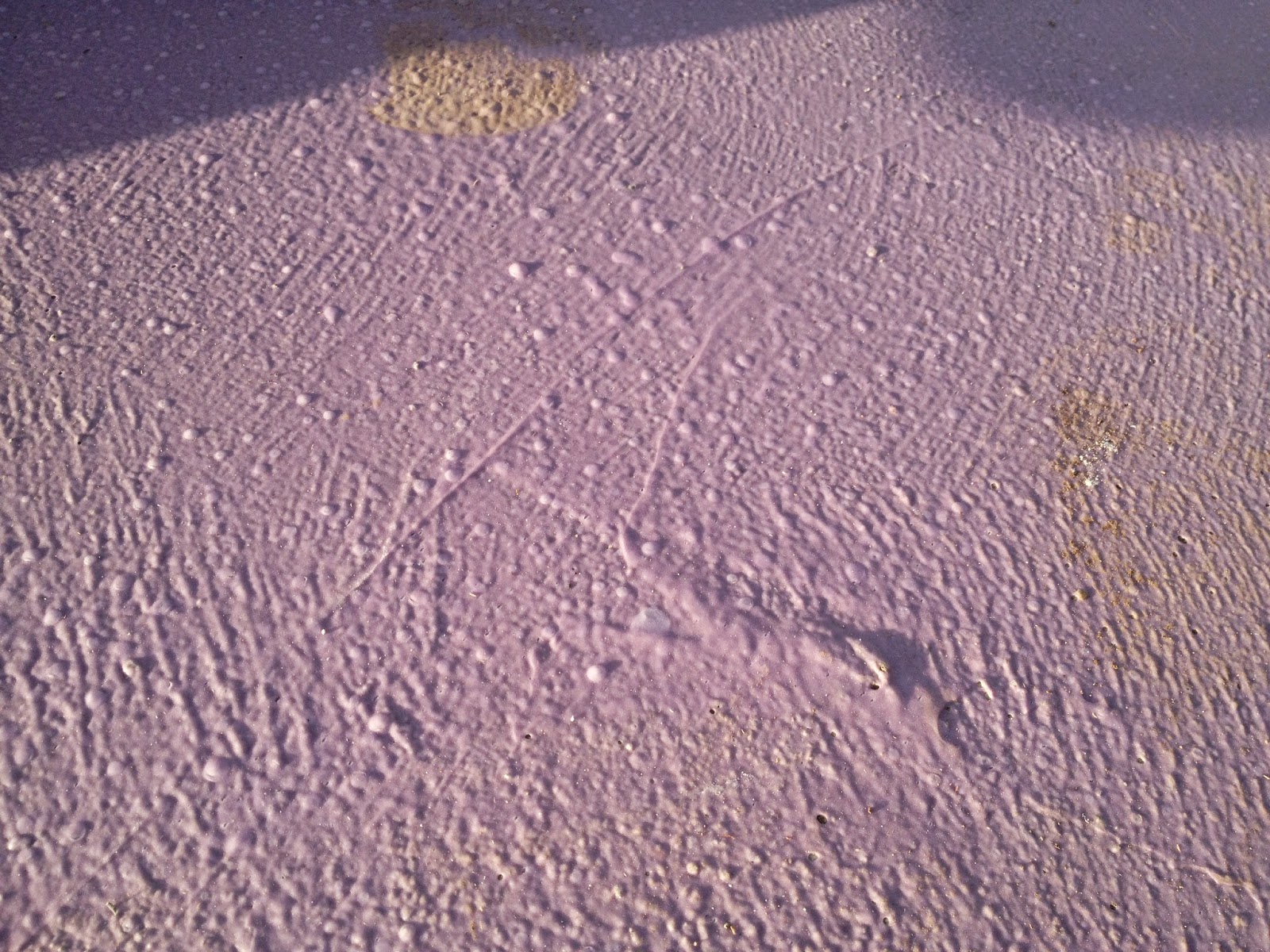 |
| Improperly applied TEC Hydraflex Membrane - click on image to enlarge |
Thickness
For the membrane to be effective, it must be installed to the thickness specified by the manufacturer. To achieve these thicknesses oftentimes requires 3 to 4 coats. One layer is usually insufficient.
Good rule of thumb: If the substrate can be seen through the membrane, the membrane is too thin. Better yet, buy a tester and measure the membrane thickness to verify the minimum thickness has been achieved.
Traffic
The membrane must be cleaned of dirt, dust and debris that collects on top of it. Thinsets and mortars will not adhere to a dirty membrane.
When in doubt - READ THE INSTRUCTIONS!
Contact the author, Paolo Benedetti of Aquatic Technology Pool and Spa at: info@aquatictechnology.com or 408-776-8220. Visit his website at: www.aquatictechnology.com. All Contents © Aquatic Technology Pool & Spa, 2013. All rights reserved.
Wednesday, October 15, 2014
APSP NPC ANSI ICC ANSI/APSP-12 Pool Plaster Standard
ANSI/APSP-12 Swimming Pool Plaster Workmanship Standards
How bad can it get and still be defensible?
· Plastering in adverse conditions (e.g. high winds, extreme heat/cold)
· Staffing difficulties (e.g. insufficient time allotted, inadequate staffing levels, poor training)
· Improperly prepared shells (e.g. leaking, seeping, voids, dry, hot)
· Shells with poor tolerances (e.g. wavy surfaces, penetrations trimmed at incorrect elevations, improper radii)
· Poor quality control measures (e.g. failure to measure/weigh batch contents or water)
· Failing to perform pre-site visits, preparations or inspections
· Refusal to hold builders responsible for making shell corrections
No one wants to tell the pool owner that their pool will not
be plastered due to any issue. Nor is it
cost effective to have to leave and return.
Most pools should never be plastered in their state of readiness, as
delivered to a plaster company. Yet the plaster company wants to satisfy their customer - not the pool owner, but the pool builder who brings them steady business.
Contact the author, Paolo Benedetti of Aquatic Technology Pool and Spa at: info@aquatictechnology.com or 408-776-8220. Visit his website at: www.aquatictechnology.com. All Contents © Aquatic Technology Pool & Spa, 2013. All rights reserved.
How bad can it get and still be defensible?
On July 28, 2014, the APSP and the NPC announced a “joint” committee
to write a new plaster workmanship standard, under the guise of APSP/ANSI-12. The alignment of APSP with ANSI, would in
effect cause the resulting standards to become “statute” in many regions of the
country. Through ANSI's affiliation with the ICC (International Code Counsel, who ironically published the International Building Code, which has been adopted across the US), this may just become law in your state.
You can see where this is going. It is a end around run on consumer rights, forcing them to settle with inferior workmanship, just because it meets the industry's own minimum acceptable level.
In other words, "how bad can it get and still be defensible?"
Their proposals for this standard include defining acceptable "deviations" and explanations as to why pool plaster cannot achieve the levels of performance delivered by other plaster trades. These deviations will be governed by "accepted trade practices" and not the BEST AVAILABLE PRACTICES. Again, locate and identify the lowest common level of performance and make that acceptable.
Fox in the Hen House
Trade associations writing their own workmanship standards
is self-serving and against the general interest of the American public. Even if a standard is written with the
absolute lack of personal biases and interests, the end result will still be a
self-serving document.
This is what I
take offense with… putting the fox in charge of the hen house.
The pool builders association will continue to refuse to
hold their members responsible for delivering properly constructed and prepared
shells, watertight, trimmed and prepared to precise tolerances. Due to the generous workmanship tolerances
provided pool builders, plasters are relegated to dealing with the issues and
variables you described. Almost every
one you describe is the result of a poorly constructed shell.
There is absolutely no reason why a plaster pool finish
cannot be delivered with a smooth, even finish that is color consistent from
batch to batch. Many of these issues are
a direct result of the human tendency to avoid conflict or extra effort:
· Plastering in adverse conditions (e.g. high winds, extreme heat/cold)
· Staffing difficulties (e.g. insufficient time allotted, inadequate staffing levels, poor training)
· Improperly prepared shells (e.g. leaking, seeping, voids, dry, hot)
· Shells with poor tolerances (e.g. wavy surfaces, penetrations trimmed at incorrect elevations, improper radii)
· Poor quality control measures (e.g. failure to measure/weigh batch contents or water)
· Failing to perform pre-site visits, preparations or inspections
· Refusal to hold builders responsible for making shell corrections
I find the lack of a quantifiable maximum water to cement
ratio for a cementitious finish audacious.
Pre-packaged materials should contain maximum allowances for water or
approved admixes. Yet the loose NPC
standards allow the crews to add water to extend its workability due to
weather, short staffing or mere laziness or refusal to measure the water (they just add water from a hose until it looks good ).
Too much water is bad
It has been scientifically proven that excess water in
cementitious products compromises it’s strength, causes discolorations,
increases porosity, encourages shrinkage and promotes check cracking. The NPC should not be allowing carte blanche with
the water to cement ratio and then attempt
to justify the errant results.
To advocate the unfettered use of water by untrained
personnel is irresponsible, especially when there are inexpensive and viable
alternatives and techniques. Instead, the
NPC should be promoting improved quality through the use of various admixes –
additional water, not being one of them.
Set accelerators, retarders and plasticizers should be the norm, instead
of the exception. The workability and
plasticity of the product would improve, as would the durability and quality. Archaic practices, such as the addition of
calcium chloride and the re-tempering of finishes would no longer be required
or acceptable.
Acceptable Alternatives
These advanced methodologies and admix practices should be advocated
and promoted. Calcium chloride
alternatives and set timing admixes are utilized in every other plaster trade,
in compliance with the requirements of the pigment manufacturers. Steel troweled plaster finishes are applied
multi-stories in the air, delivered by the bucket, on scaffolding, in the hot
sun and in windy conditions. Their substrates
are wavy and irregular. These trades even
lack the luxury of flood curing their finishes.
Yet the results are often far superior to the results seen in the pool
plaster industry – even without remedial work.
Cement chemistry is nothing new. It dates back centuries to the Roman’s use of
volcanic ash as pozzolans and animal fats and milks as plasticizers. Yet, the swimming pool industry is always the
last to embrace decades old and proven methodologies and technologies that are
utilized in other related construction trades.
When these practices are “discovered” by our industry, their revelations
appear as a sudden rapture (recent case in point – penetrating sodium silicate
curing compounds for shotcrete & concrete).
Virtually flawless pool plaster finishes are achievable. I consider myself very lucky to have plaster
sub-contractors who understand the idiosyncrasies of their trade. I take pride in delivering a high tolerance
and quality watertight shell upon which they can ply their trade. Pre-site inspections with my sub-contractors
identify concerns that can be addressed prior to plaster day (pressure washing
& surface prep, local water quality, staffing requirements, weather forecasts,
access, etc.).
My favorite sub-contractor (Adams Pool Specialties) brings their own water supply, which is measured as it is metered into the
batch. This is not rocket science – just
an expressed concern with craftsmanship.
The end results are that my clients receive a virtually flawless hand
troweled plaster finish, free of the issues that plague the industry.
Through this new joint APSP/ANSI-12 standards committee, the NPC has the
opportunity to establish shell tolerances and standards, which will allow their
members to execute higher quality finishes.
NPC members should no longer accept shells that fail to meet defensible
workmanship standards and design tolerances, which affect their end
product. The American public needs to be given cosmetically acceptable standards, not minimums that are barely acceptable. The need to defend the
resultant questionable workmanship and cosmetic blemishes will become a thing
of the past.
Let's see who takes the high road...
Contact the author, Paolo Benedetti of Aquatic Technology Pool and Spa at: info@aquatictechnology.com or 408-776-8220. Visit his website at: www.aquatictechnology.com. All Contents © Aquatic Technology Pool & Spa, 2013. All rights reserved.
Subscribe to:
Posts (Atom)